History
Refugees' Livelihood Strategies in Long-term Encampment (Thesis)
A 2022 Erasmus University Rotterdam master's thesis investigating how refugees navigate structural barriers to sustain livelihoods and build social capital under protracted encampment at Dzaleka.
2 min read
Reviewed
Academic research
Key facts about Refugees' Livelihood Strategies in Long-term Encampment (Thesis)
- Author
- Academic Research Team
- Institution
- Erasmus University Rotterdam (Netherlands)
- Year
- 2022
- Degree
- Master of Arts in Development Studies
- Focus
- Livelihood strategies, social capital, structural barriers
- Fieldwork Location
- Dzaleka Refugee Camp, Dowa District, Malawi
On this page
Refugees’ Livelihood Strategies in a Setting of Long-term Encampment: The Case of Dzaleka Refugee Camp in Malawi is a 2022 academic master’s thesis published by Erasmus University Rotterdam. The research offers a critical empirical examination of how long-term camp residents adapt, survive, and build economic agency despite severe legal restrictions on formal employment, business ownership, and land tenure under Malawi’s 1989 Refugee Act.
Drawing on extensive qualitative fieldwork inside Dzaleka, the study analyses the divergence between humanitarian policy narratives of “self-reliance” and the day-to-day realities of navigating chronic economic vulnerability.
Key Research Findings
1. Social Capital as Survival Infrastructure
The thesis documents that access to financial capital in Dzaleka is heavily reliant on informal social infrastructure rather than institutional credit. Residents rely on:
- Peer Mutual-Aid Associations (Ikirimba): Rotating savings and credit associations organised along nationality, language, or sector lines.
- Transnational Remittances: Financial support from diaspora family networks in South Africa, North America, and Europe.
- Inter-Household Resource Sharing: Informal food and cash borrowing between long-term residents and newly arrived asylum seekers.
2. Critique of Humanitarian “Self-Reliance”
The author critically evaluates international humanitarian programs promoting “self-reliance,” arguing that micro-grants and vocational training often fail to deliver sustainable independence when encampment laws restrict freedom of movement and right to work outside Dowa District.
3. Informal Market Economy
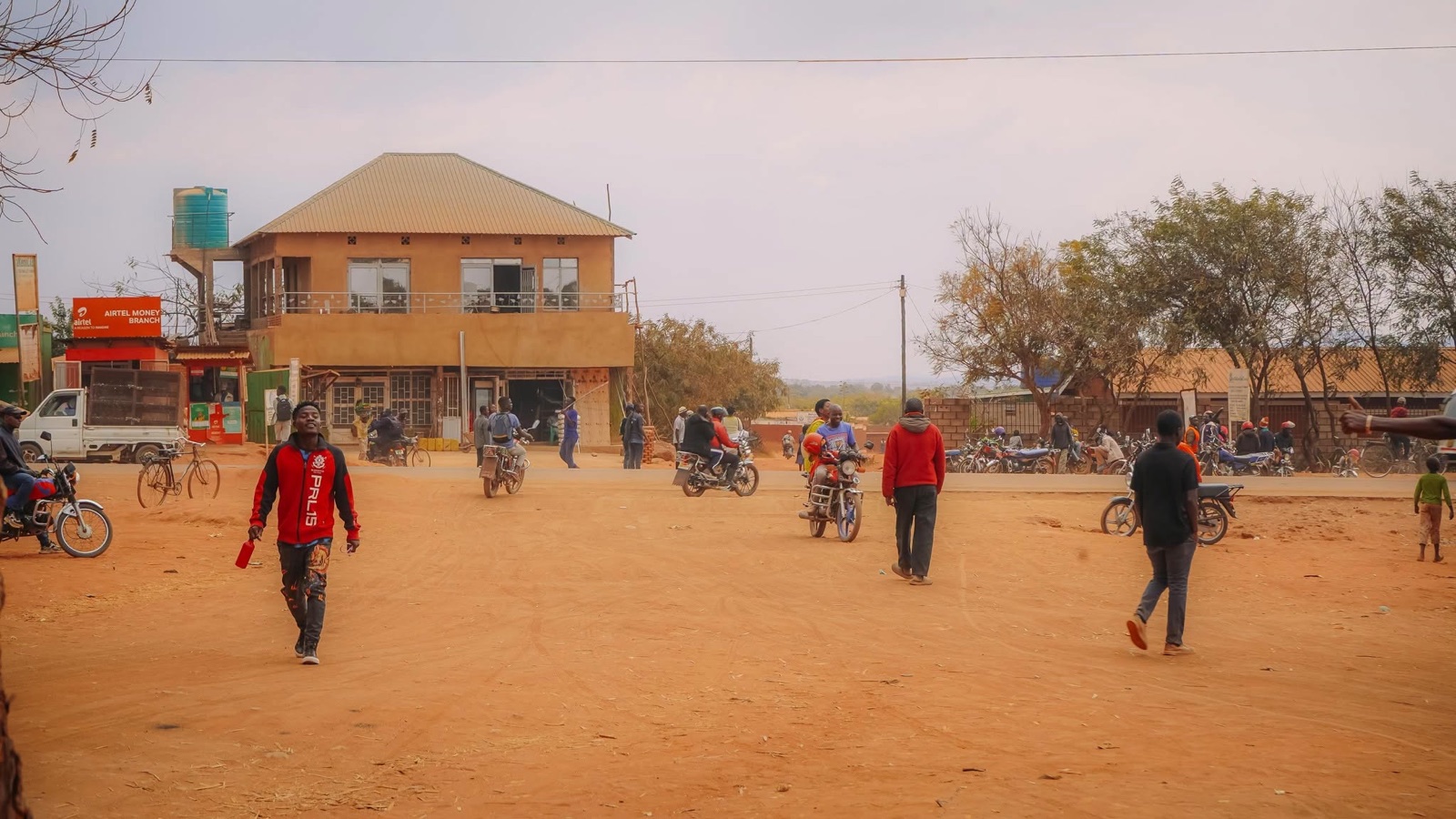
The study highlights how residents transform internal spaces within Dzaleka—such as the Katudza sector—into vibrant commercial nodes featuring tailoring shops, grocery stores, barber shops, mobile money transfers, and tech repair centers.
Academic & Policy Impact
The thesis contributes to critical forced migration studies by underscoring that refugee agency cannot replace structural policy reform. It has been cited in literature on African encampment dynamics, refugee-led social capital, and Southern African refugee economics.
References
Sources
- 1Refugees' Livelihood Strategies in a Setting of Long-term Encampment: The Case of Dzaleka Refugee Camp in Malawi
Erasmus University Rotterdam Thesis Repository, 2022
Master's thesis examining social networks and economic self-reliance in Dzaleka.
- 2UNHCR Malawi Operational Report 2022
UNHCR, 2022
Related entries
Infrastructure
Livelihoods and the local economy
How residents earn income through trade, services, agriculture, creative work, training, and digital labour despite restrictions on movement and formal employment.
Institution
Refugee-led organisations in Dzaleka
Organisations founded or led by refugees that provide education, advocacy, technology, livelihoods, arts, protection, and mutual support within Dzaleka and beyond.
History
Waiting in Dzaleka Refugee Camp: Agency through Self- and Community Organisation
A 2025 Master's thesis by Anna-Lena Stammen (University of Applied Sciences Erfurt) analysing refugee agency, waiting, coping mechanisms, social space mapping, and refugee-led organisations under Malawi's encampment policy.
Place
Dzaleka Refugee Camp
A long-established refugee settlement in Dowa District, Malawi, opened in 1994 and now home to a large, multilingual community from the Great Lakes region and the Horn of Africa.
Help improve this entry
Send a correction, a stronger source, a missing detail, or a photograph. Submissions are reviewed against the encyclopedia's editorial guidance before the public record changes.