Health
Maternal health and malaria in the 2024 MDHS
Also known as Dzaleka maternal health 2024, Dzaleka malaria MDHS
Survey findings on antenatal care, delivery, mosquito-net coverage, malaria prevention during pregnancy and malaria testing among young children in Dzaleka.
2 min read
Reviewed
Academic research
Key facts about Maternal health and malaria in the 2024 MDHS
- Antenatal care from a skilled provider
- 95% for the most recent birth
- Four or more antenatal visits
- 78% in Dzaleka; 62% elsewhere in Malawi
- Facility delivery
- 98% of live births in the preceding two years
- Households owning an insecticide-treated net
- 39% in Dzaleka
- Malaria RDT positive, children under 5
- 0.4% in Dzaleka; 23% elsewhere in Malawi
On this page
Antenatal care
For the most recent birth among surveyed women aged 15 to 49, 95 percent in Dzaleka received antenatal care from a skilled provider. Seventy-eight percent completed four or more visits, compared with 62 percent elsewhere in Malawi. The report estimated that 91 percent of the most recent live births in Dzaleka were protected against neonatal tetanus, similar to the national comparison of 89 percent.
Delivery
Among live births in the two years before the survey, 98 percent in Dzaleka occurred in a health facility and 99 percent were assisted by a skilled provider. Thirteen percent were delivered by caesarean section. The comparison estimates elsewhere in Malawi were 97, 96 and 12 percent respectively.
These high coverage estimates describe contact with services. They do not measure medicine stocks, staffing, waiting times, referral capacity or quality of care.
Mosquito nets
Thirty-nine percent of Dzaleka households owned at least one insecticide-treated net (ITN), with an average of 0.6 ITNs per household. Only 13 percent had at least one ITN for every two people who stayed in the household the preceding night, compared with 26 percent elsewhere in Malawi.
Among people in the sampled households, 32 percent of children under five and 44 percent of pregnant women had slept under an ITN the previous night.
Prevention during pregnancy
Among women with a live birth in the preceding two years, 85 percent in Dzaleka received at least one dose of sulfadoxine-pyrimethamine/Fansidar for intermittent preventive treatment in pregnancy, compared with 92 percent elsewhere. Dzaleka’s estimates were higher for repeat doses: 84 percent received at least two doses and 76 percent at least three, compared with 82 and 62 percent respectively.
Malaria testing
Rapid diagnostic testing found malaria in 0.4 percent of sampled Dzaleka children under five, compared with 23 percent elsewhere in Malawi. This is a point-in-time survey result influenced by geography, season, exposure and prevention. It should not be read as proof that malaria risk is absent or that treatment and prevention services are unnecessary.
References
Sources
- 1Understanding the health, nutrition and population situation in Dzaleka Refugee Camp
National Statistical Office, UNHCR and World Bank-UNHCR Joint Data Center, May 2026
Chapter 5, maternal and child health and malaria.
- 2Malawi - Demographic and Health Survey 2024
World Bank Microdata Library, 20 March 2026
Maternal-health, mosquito-net and biomarker survey metadata.
- 3The 2024 Malawi Demographic and Health Survey
National Statistical Office of Malawi, 2026
Related entries
Health
2024 health, nutrition and population study
The Dzaleka component of the 2024 Malawi Demographic and Health Survey: how 720 selected households were sampled and what the resulting report can and cannot establish about the camp.
Health
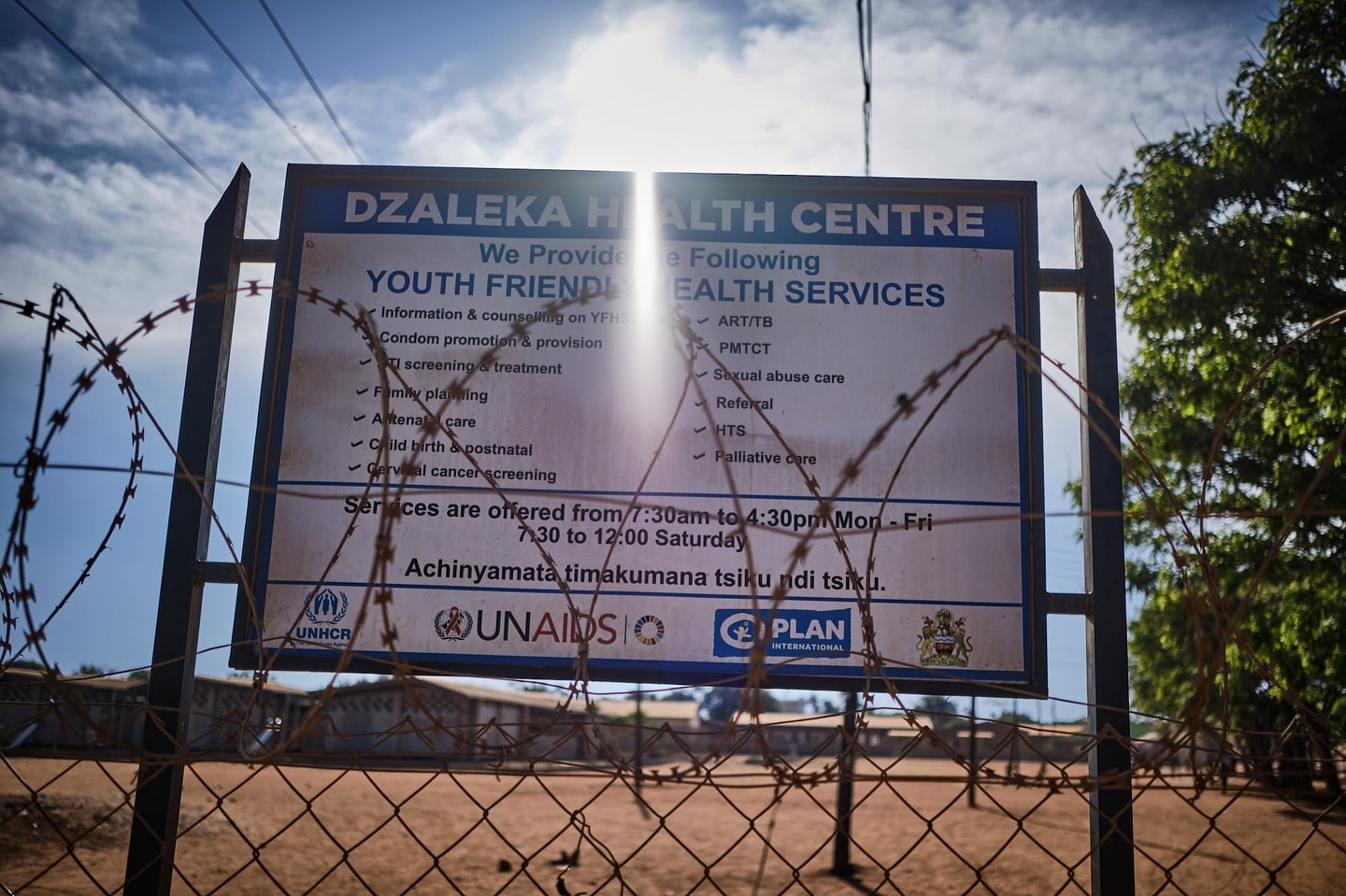
Dzaleka Health Centre
The primary health facility inside Dzaleka, serving refugees, asylum-seekers, and surrounding communities in Dowa District.
Health
Fertility and family planning in the 2024 MDHS
Survey estimates for fertility, age at first birth, teenage pregnancy, contraceptive use and unmet family-planning need among women in Dzaleka.
Health
Vaccination, nutrition and anaemia in the 2024 MDHS
Dzaleka estimates for childhood vaccination, HPV vaccination, child growth and anaemia among children and women in the 2024 national health survey.
Help improve this entry
Send a correction, a stronger source, a missing detail, or a photograph. Submissions are reviewed against the encyclopedia's editorial guidance before the public record changes.