History and memory
Dzaleka Time Capsule
Documents, personal accounts and photographs tracing Dzaleka from political prison to refugee settlement.
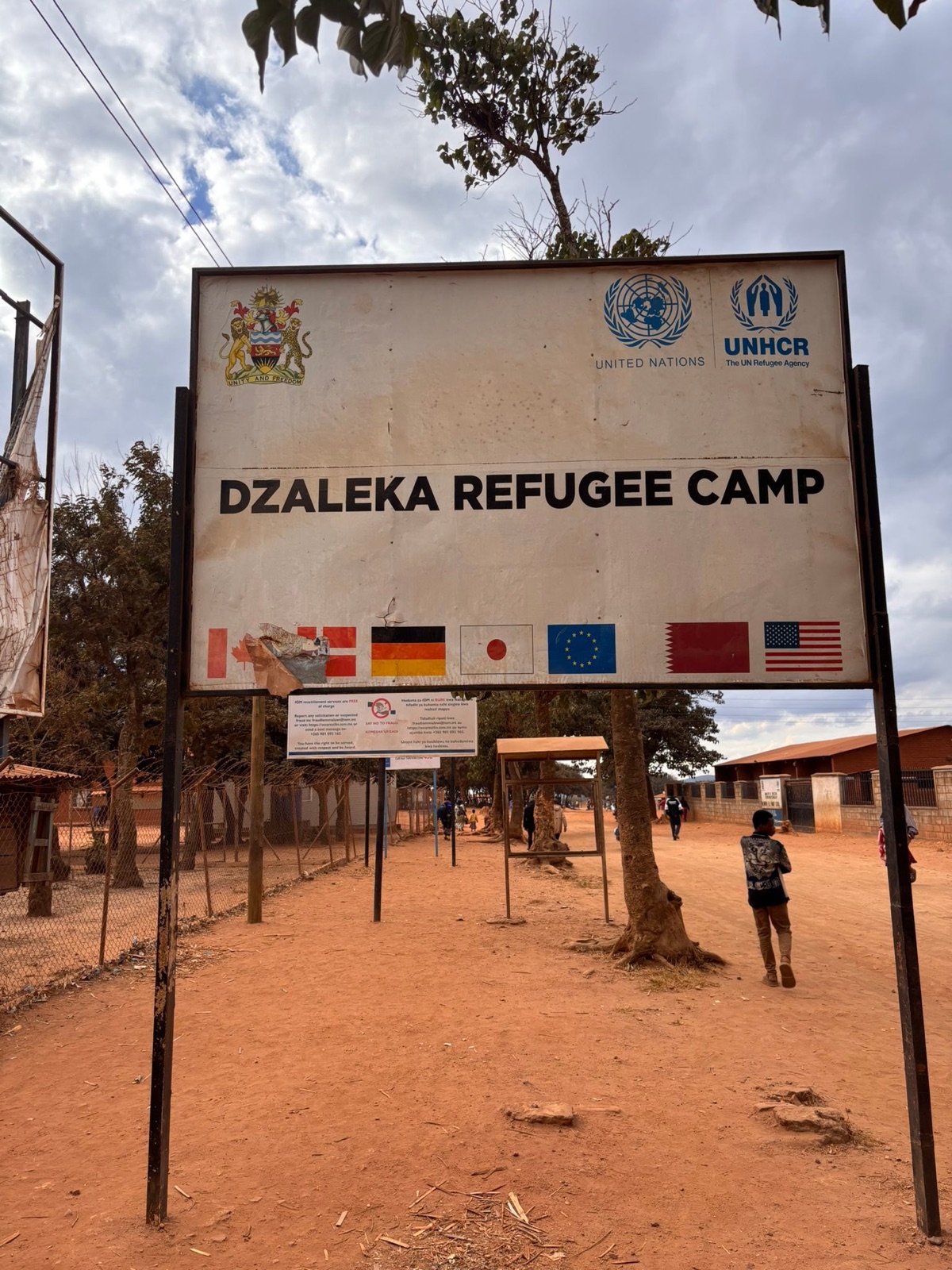
Dzaleka Online Services archive.
This collection includes accounts of imprisonment, persecution and loss, and may name people who have died.
01
1964–1994
Political prison
Before it became a refugee camp, Dzaleka was a political detention facility during the presidency of Hastings Kamuzu Banda. Political dissidents and religious minorities were held there.
The records below describe the imprisonment of Jehovah’s Witnesses who refused to join the Malawi Congress Party, forced labour and conditions in the camp during the 1970s.
From the records
1976State Department Cable
“In the Dzaleka detention camp near Dowa, north of Lilongwe, there are now over 3,000 male witnesses who have been incarcerated for a two-year period.”
Source: State Department Cable 1976-135342
1978Africa Contemporary Record
“Grim conditions prevail at Dzaleka. A report smuggled from the camp in April 1976 said 70 people had died there—65 of them children.”
Source: Africa Contemporary Record, Annual Survey and Documents, 1978
1978Jehovah's Witnesses Yearbook
“At the beginning of the service year, hundreds of our Malawi brothers were still in detention at Dzaleka, a camp in the north of the country, which had previously been used for political detainees.”
Source: 1978 Yearbook of Jehovah's Witnesses
02
1994–2000
A refugee camp opens
The Government of Malawi and UNHCR established Dzaleka as a refugee camp in 1994, as conflicts displaced people across Rwanda, Burundi and the Democratic Republic of the Congo.
Joseph Ndereyimana’s account records his arrival in December 1995, the accommodation arrangements and the small number of residents in the centre’s early years.
The name Dzaleka comes from the Chichewa expression “N’dzaleka”, commonly translated as “I will not do it again”.
Personal accounts
1995Personal Testimony: Joseph Ndereyimana
“On 23rd December 1995, we were taken to the Dzaleka Refugee Centre, outside Dowa. We were feeling happy in the hope that we might meet up with people we knew, and even hear news of our families whom we had left behind in Kashusha.”
Source: "Walk this way: the journey of a Rwandan refugee" (1999)
1995Camp Organization
“Dzaleka Centre was organised so that people of each nationality had their own accommodation. For example, there was a single men's dormitory for the Rwandans, one for the Zaireans, one for the Somalis and so on.”
Source: Personal testimony, Joseph Ndereyimana
1995Initial Population
“At the outset, there were only about one hundred and fifty refugees in this well-equipped centre: families were accommodated in houses while there were dormitories for the singles.”
Source: "Walk this way: the journey of a Rwandan refugee" (1999)
03
2000 onwards
Community life
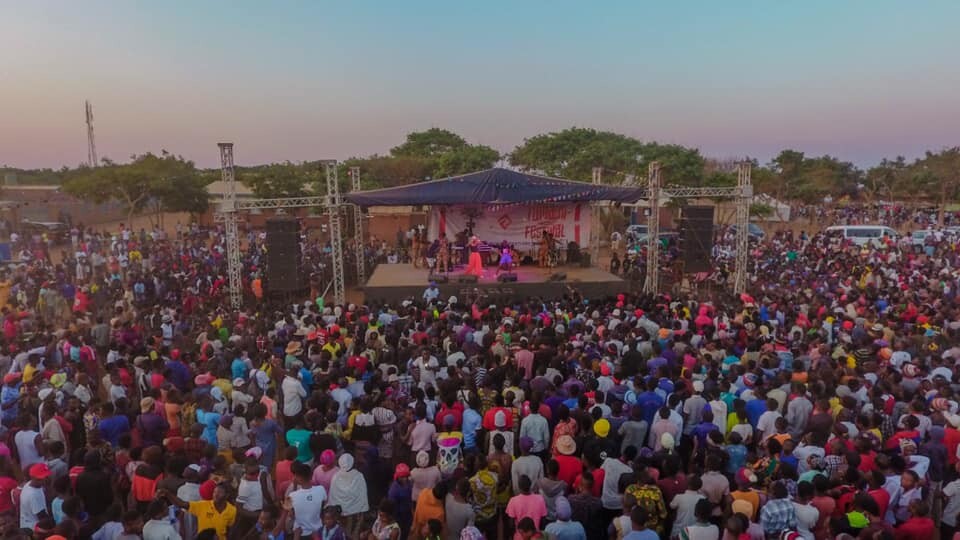
Dzaleka developed into a long-term settlement. Residents established businesses, schools, faith communities, cultural groups and refugee-led organisations.
In 2007, the closure of Luwani camp brought approximately 3,000 people to Dzaleka. The population continued to grow, increasing pressure on housing, schools and health services. Read the history and its sources.
Population in the records
- 1995
- About 150 residents at the outset, in Joseph Ndereyimana’s account.
- 2007
- About 5,000 before the Luwani transfer; more than 8,000 afterwards.
- End of 2024
- More than 52,000 residents, reported by UNHCR.
These are dated records. See population and demography for sources and context.
From the records
2007State Department Cable
“The Dzaleka camp covers 201 hectares and UNHCR estimates it can hold a maximum of 9300 people. Once all refugees are relocated it will have a population approaching 8800 people and continues to get a steady stream of new refugees from the Congo.”
Source: State Department Cable 07LILONGWE803
2023Academic Research
“This study inquired into the nature of identity among refugee youth living at Dzaleka Refugee Camp in Malawi. Aged between eighteen and twenty-four, the sample comprised of twenty-two female and thirty-eight male participants, from Burundi, the Democratic Republic of Congo, Rwanda, and Somalia.”
Source: Refugee Youth Identity Formation at Dzaleka Refugee Camp (2023)
2025Food Security Study
“Food security and dietary diversity surveys were conducted with 300 women living in Dzaleka camp, Malawi. Ninety-one percent of women had severe food insecurity and women only ate on average 2–3 food groups the previous day.”
Source: Food insecurity and dietary diversity among women living in Dzaleka refugee camp, Malawi (2025)
Add to the community archive
Share photographs, documents or a personal account of life in Dzaleka. Include the date, names and source where known.
Digital material only. For help with an upload, contact bakari@mail.dzaleka.com.